
The Intellectual Divide: Why Modern Historians Misunderstand Thomas Jefferson
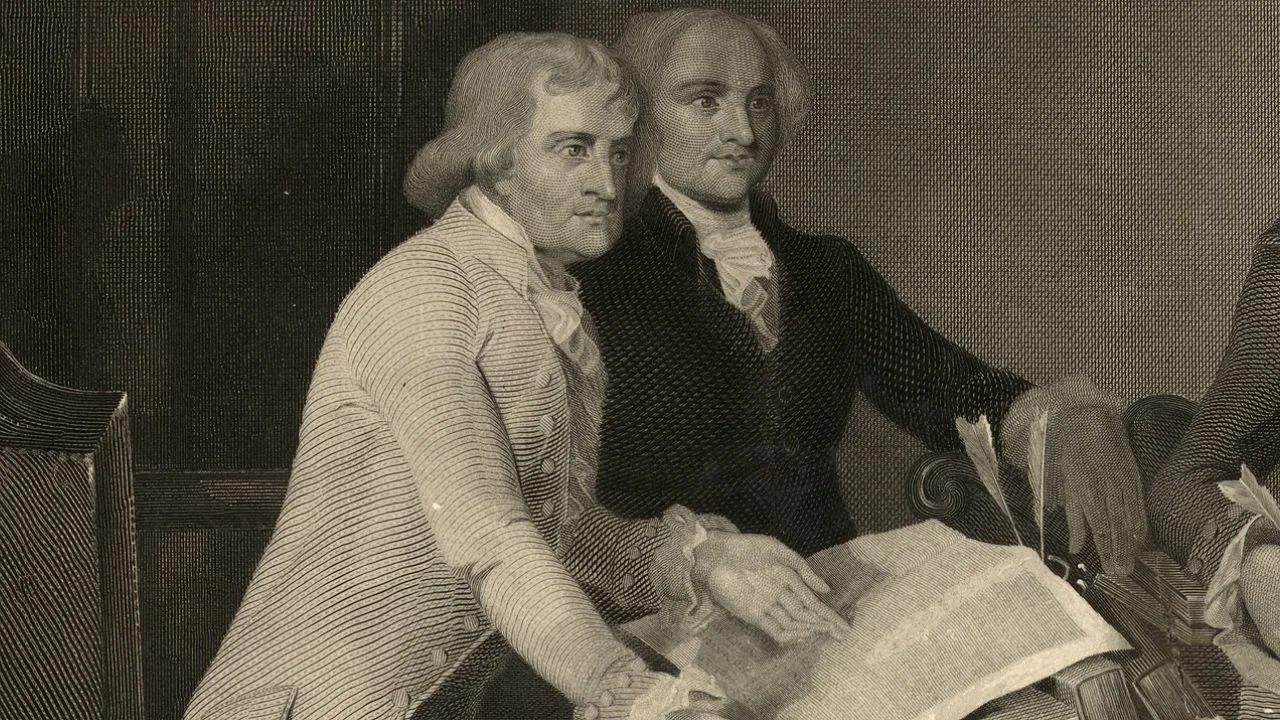
John F. Kennedy once famously joked at a dinner for Nobel Prize winners that the gathering was the most extraordinary collection of talent and knowledge ever assembled at the White House, with the possible exception of when Thomas Jefferson dined alone. Kennedy understood the scale of Jefferson's intellect, a sentiment reflected in modern presidential scholarship where Jefferson is routinely ranked as one of the most intelligent U.S. Presidents in history, often securing the absolute top spot for sheer cognitive breadth and polymathic genius.
This unmatched intellectual stature is not merely a modern retrospective evaluation; it was recognized by the greatest minds of his own era. For 18 years, spanning his entire tenure as Vice President and President of the United States, Jefferson served as the president of the American Philosophical Society, the nation’s premier intellectual and scientific institution. He was the chosen successor to lead the organization founded by Dr. Benjamin Franklin, a man who deeply admired the young Virginian as a fellow pillar of the American Enlightenment.
Yet, modern critics seem to forget this entirely. These scholars simply are not at the same intelligence level to even try to know how Jefferson thought. He thought really differently than they do, operating on a plane of thought that their narrow frameworks cannot hope to reach. Because of this massive cognitive divide, the scholars and commentators of the twenty-first century who claim to pierce the veil of his mind fundamentally misunderstand him, and their assumptions about his motives are entirely flawed. Instead of projecting their own limitations backward in time, they should confine their histories strictly to concrete evidence.
This need for objective boundaries becomes obvious when looking at the fashionable trends in modern academia, where a subset of critics, often driven by a zeal for contemporary social orthodoxy, pretend they possess a psychological map of Jefferson's subconscious. They look at his writings, his contradictions, and his private life, and they confidently project their own modern anxieties, biases, and intellectual limitations onto his character. In doing so, they assume that because they have cataloged his actions, they have mastered his intellect. This is a profound error born of historical arrogance, stemming directly from the mistaken belief that they operate on the same intellectual plane as those who forged a republic out of raw philosophy.
By analyzing the past through a narrow, hyper-politicized lens, these historians completely lack the capacity to grasp the weight of the decisions the founders faced. When they attempt to dissect Jefferson's internal thoughts, they are not uncovering history; they are merely looking into a mirror and misinterpreting their own reflections. Because they cannot comprehend the intricate balance of Enlightenment philosophy, political pragmatism, and the crushing constraints of that era, they resort to simple, cynical caricatures, assuming his mind worked exactly like theirs, just with older vocabulary. It did not, and nowhere is this arrogance more glaring than in the historical commentary surrounding Jefferson's private life and his executive decisions. Lacking definitive, exhaustive documentation, modern writers routinely substitute gossip and pop psychology for rigorous scholarship.
A prime example of this speculative writing can be found in the ongoing Sally Hemings controversy. Modern commentators speak with absolute, unearned certainty about the exact nature, emotional dynamics, and intimate details of Jefferson's relationship with Sally Hemings, constructing elaborate narratives about his internal desires, guilt, and secret motivations. The truth is, the concrete historical record is incredibly sparse. By treating their sociological theories as established fact, these writers expose their own biases and perversities, proving they care far less about what the evidence actually validates than they do about using his personal life to score points in modern cultural debates.
This same intellectual deficit distorts the analysis of his major political milestones, such as the Louisiana Purchase of 1803. Critics frequently claim to find a hypocritical contradiction in Jefferson's mind when he authorized the purchase of the Louisiana territory, assuming he was simply a dogmatic strict constructionist who abandoned his principles the moment power became available. They do not have the intellectual capacity to understand the grand strategy at play. It was not a failure of principle, but a calculated, agonizing choice between the literal text of the Constitution and the permanent security of the American republic against European empires. Ultimately, they analyze a chess grandmaster's move with the intellect of a child playing checkers.
Jefferson's mind was shaped by the brutal, messy reality of nation-building and the vast horizon of the European Enlightenment, environments that cannot be replicated in twenty-first-century academic seminars. If historians wish to write about him, they must have the humility to recognize their own limitations and stop trying to psychoanalyze a mind they do not have the depth to understand. They must cast aside their arrogance, stop inventing internal monologues for men who lived centuries before them, and stick strictly to the concrete evidence left behind.