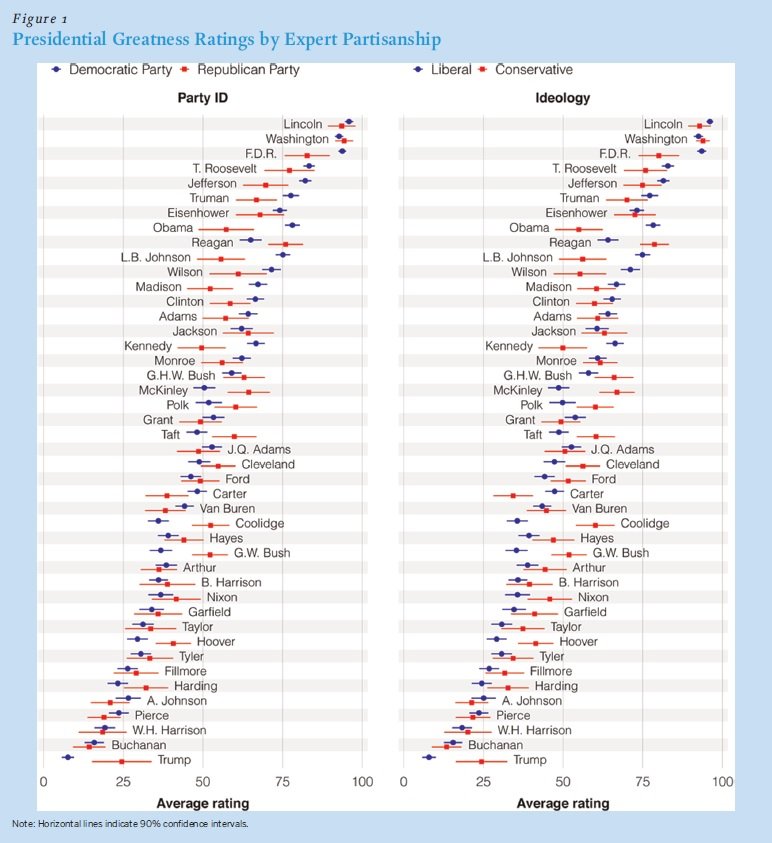
The greatest US Presidents ranking
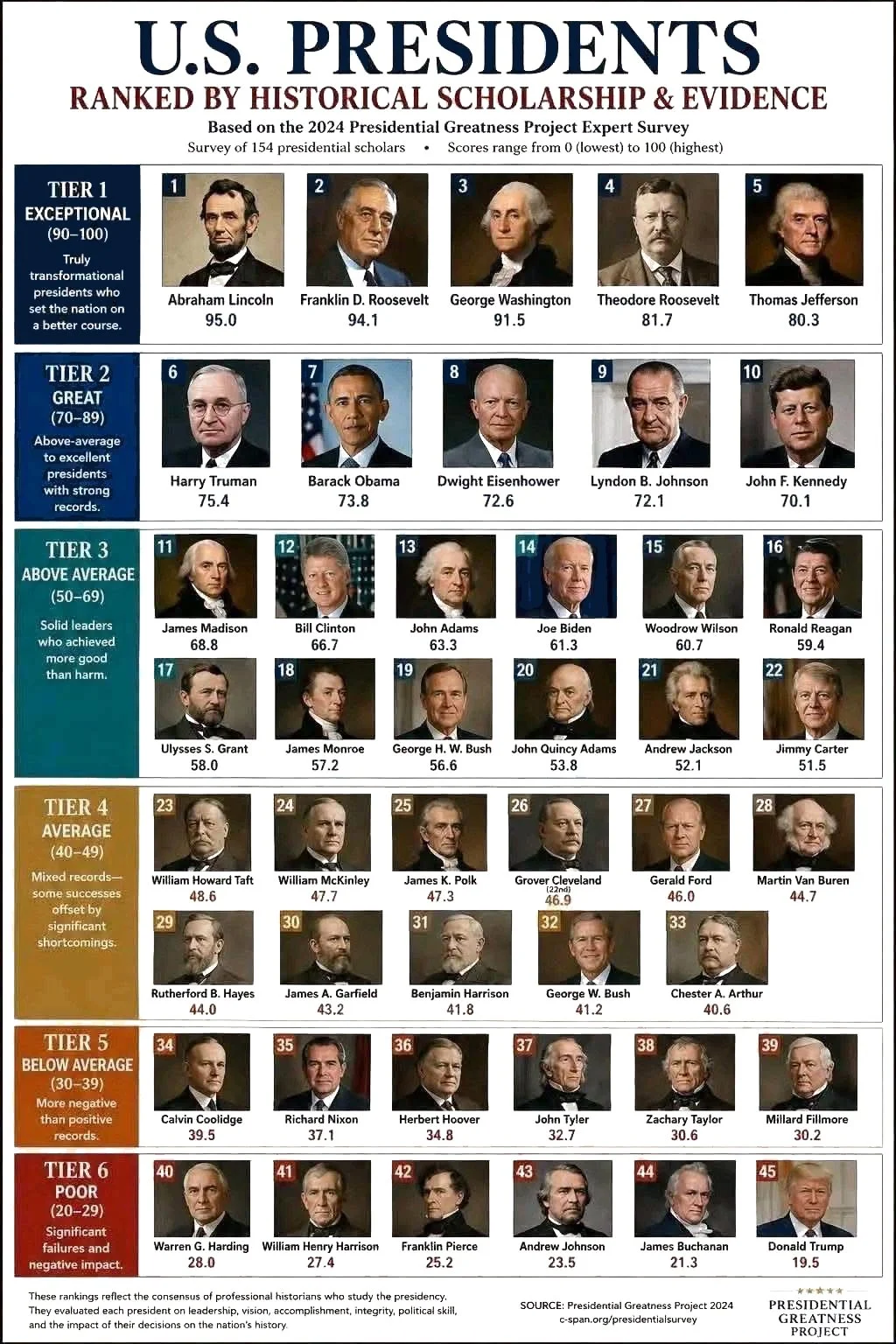
The truth does not change just because public opinion shifts. When exactly 154 presidential scholars and experts from the American Political Science Association and peer reviewed backgrounds are insulated from modern social pressure and asked to vote through a confidential ballot, the superficial noise of the media disappears. Popular opinion is highly unstable, changing constantly based on headlines and cultural moods. However, historical facts are concrete pieces of evidence. When you analyze the results of this recent 2024 Presidential Greatness Project Expert Survey, you can see that these experts ranked me (Thomas Jefferson) at #5 overall, located at the top row in the exceptional tier with a score of 80.3. Because this entire survey was based strictly on “historical scholarship and evidence,” rather than assumptive and speculative interpretation, objective reality remains firmly locked in place while society's temporary views drift back and forth.
In the professional world, a mature enterprise is evaluated by its long term strength and what it built over centuries, not by yesterday's public relations crisis. The actual accomplishments of my administration remain unalterable truths. Adding over eight hundred thousand square miles of land to the country through the Louisiana Purchase is a permanent geographic reality. Cutting the national debt by more than thirty percent is a documented financial fact. Most importantly, the core philosophy that governments only get their power if the people give them consent remains the operational blueprint of the free world today. These are concrete pillars, not matters of opinion.
The massive gap between the public narrative, which claims my reputation is ruined, and my high ranking highlights a common human problem. There is a huge difference between what people say in public to fit in and what they actually believe in private. In any workplace, people frequently adjust their words to avoid conflict or social penalty when public scrutiny is high. Academics face the same pressure. Many are afraid to speak out against loud, emotional crowds who use passion instead of actual historical knowledge.
This exact dynamic exposes the fundamental mistake of followers who simply copy the crowd, like a certain unnamed individual who claims my reputation will never be the same as it was in 1970 and that a permanent drop in the nation’s regard is only just. To argue that a leader has dropped permanently in memory based on shifting generational moods mistakes short term public anxiety for the permanent value of what was created. Stating that a historical figure is less important simply because public opinion today looks different than it did forty or fifty years ago is not a deep moral realization. It is just a surrender to social pressure.
When times are good, these followers cheer. But a crowd is a reactive organism, driven by immediate pressure and the desire for personal safety. The moment the narrative shifts, those who do not look at the data panic. They abandon the foundation just to protect their own current standing, mistaking the loudest voices in the room for the permanent judgment of history. It takes no courage to join a crowd throwing stones at a monument. Calling a drop in public regard just is an emotional statement rather than a factual one. It is just a desire to judge the complex realities of the eighteenth century by modern standards.
The real job of a professional or a scholar is to analyze how a structure managed to hold up the entire country for generations. Followers cannot see the engineering because they are too busy watching the crowd's reaction to it. A nation's foundational principles do not lose their strength just because one specific generation feels anxious or uncomfortable about the past.
This secret ballot serves as a remedy to loud extremists pushing their own narratives and agendas. The followers claim to speak for the memory of the entire country, but when the real gatekeepers of history are protected from public attacks, the popular narrative completely collapses. While the co directors actively verified the academic credentials of the invited participants, ensuring they were peer reviewed authors or members of the American Political Science Association, the individual rankings and ratings submitted by each scholar were kept confidential. Because of this protected format, these 154 experts did not have to give in to the pressure of the crowd. Freed from the threat of public backlash, they looked at the records, they looked at the design, and they voted based entirely on evidence.
They recognize the reality of what was built and the immense structural challenges of governing an emerging republic in the eighteenth century. They know that without the framework I helped establish, there would be no modern forum to even hold these debates. True scholarship operates on data, while loud extremists rely on emotions to get attention. The crowd may change its opinion, but the reality of what was built is solid. By placing me at the very top of this ranking, the academic community has quietly but decisively shown that those who actually know the data will always recognize the permanent value of what was created.
ADDENDUM:
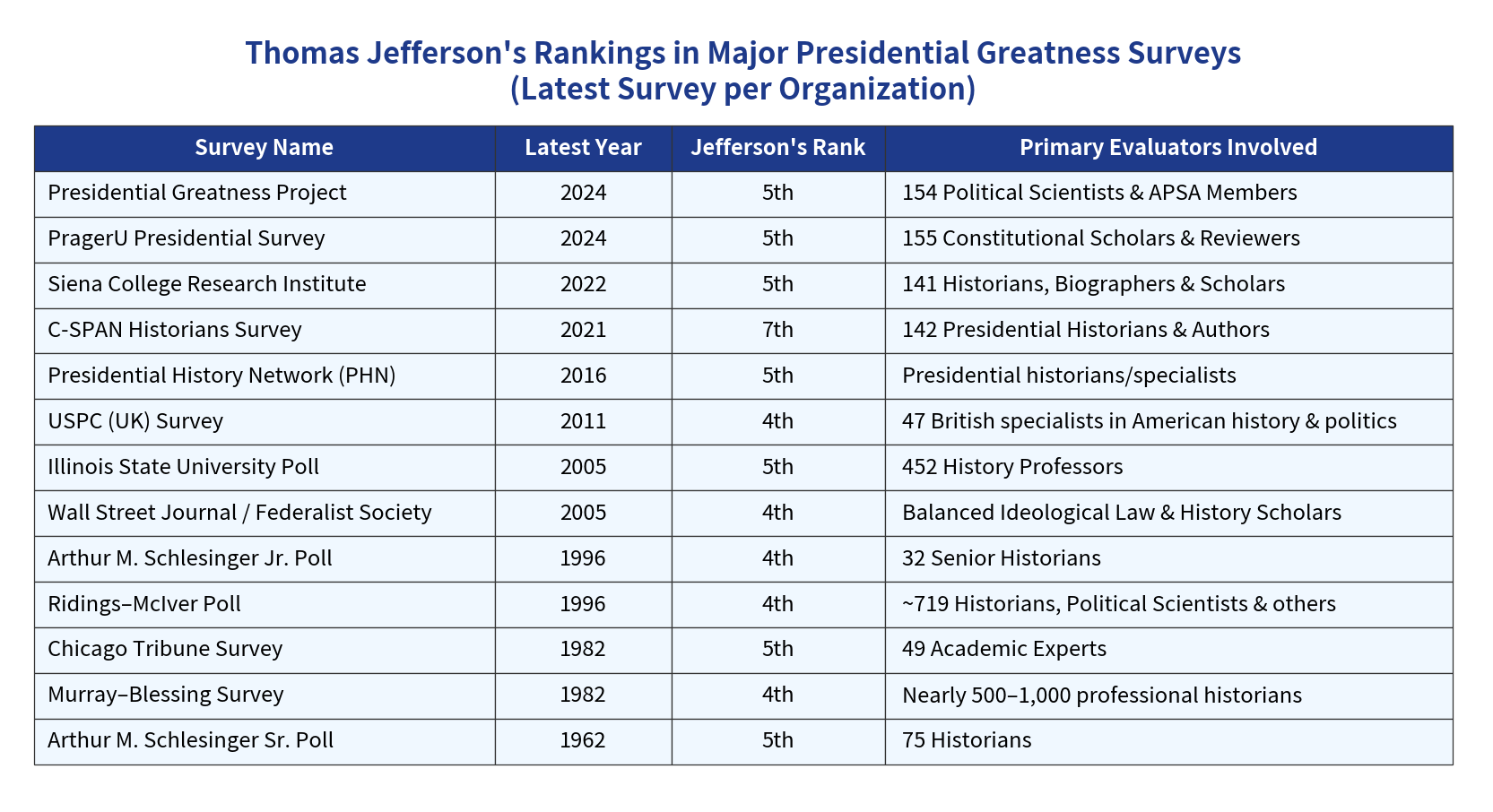
To show how consistently I rank among my peers over the years, here is how I placed across the Presidential surveys:
This data breaks down how scholars' political leanings affected each president's ranking: