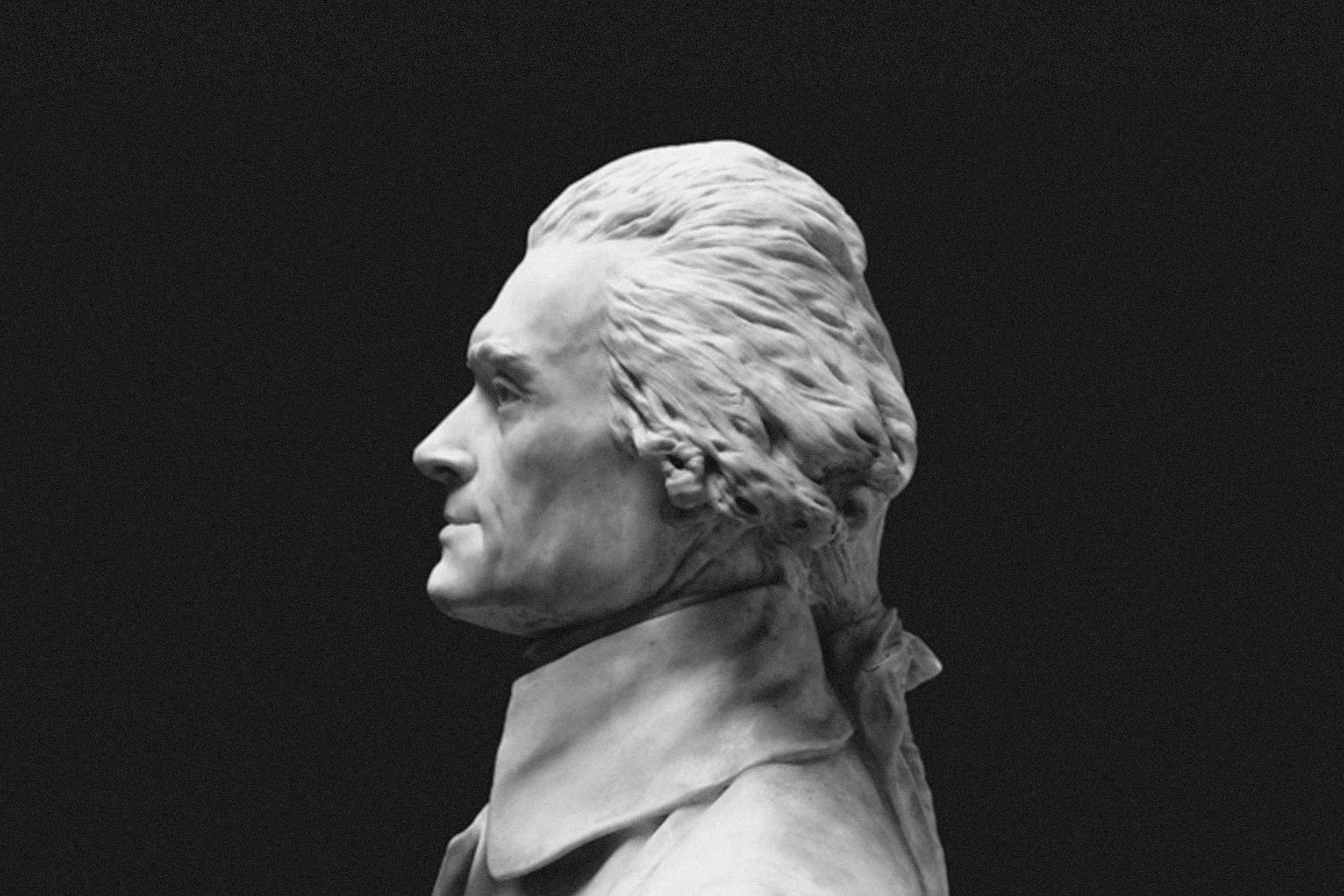
Thomas Jefferson is perfect in an imperfect world
In modern culture, it has become fashionable to tear down historical giants. Society is told to view the past with a cynical eye, and whenever the name Thomas Jefferson is mentioned, it is inevitably followed by a qualifier like "nobody’s perfect." But why even say it? In a ruthless and careless world, applying that phrase to Jefferson is entirely superfluous, as no human being in history has ever achieved perfection. When a man spends his life standing with unyielding integrity, sacrificing his personal wealth and happiness for a budding nation, he achieves something rare. For an imperfect world, Thomas Jefferson was as close to a perfect public servant as a person can possibly be.
To understand Jefferson’s true stature, one only has to look at his staggering, off-the-charts intelligence and consistent productivity. At just 33 years old, he drafted the Declaration of Independence, providing the philosophical bedrock for American liberty. As president, he doubled the size of the nation with the Louisiana Purchase and meticulously planned the Lewis and Clark Expedition to map the continent and gather scientific data. He was a self-taught architectural master who designed Monticello and the University of Virginia. When the nation needed a library after British forces burned the Capitol, he sold his own massive collection of thousands of the choicest books to restart the Library of Congress. From inventing agricultural tools and trying to pass laws abolishing slavery to establishing elementary schools and founding a revolutionary secular university during his twilight years -- among the countless invaluable contributions he made -- his mind operated on a completely different plane. There was simply no time left in his 83 years to be anyone other than the genius who built America.
His moral standards and selflessness stand in sharp contrast to the politicians of today. Jefferson held himself to a sky-high ethical code. For example, in a famous letter to his cousin, John Garland Jefferson, he flatly refused to hire him for a government post, even though there was no law against it. He believed that public service was a sacred trust, writing that a man in office must consider himself "public property."
Because he viewed himself as public property, he extended this absolute standard to his defense of liberty, singlehandedly saving the First Amendment. When the prior administration passed the Alien and Sedition Acts and threw journalists in jail simply for criticizing the president, Jefferson took decisive action. Upon entering office, he pardoned those imprisoned writers and wiped away their fines. He believed so deeply in freedom of speech that he allowed the press to fiercely denigrate him throughout his presidency, enduring their vicious attacks without retaliation. He famously argued that given the choice between a government without newspapers or newspapers without a government, he would choose the latter. He sacrificed his own reputation to ensure a free press could survive. He rejected the pomp and luxury of power, treating his political career as a "splendid torment" that he endured strictly out of duty.
Modern critics and envious, biased historians frequently resort to psychological guesswork to lob accusations of hypocrisy at him, particularly regarding his status as a slaveholder. But they ignore a fundamental truth: there is a vast difference between wanting to do something and being legally and financially able to do it. Jefferson inherited a mountain of debt from his father-in-law, which ballooned over his four decades of public service. Because he was away serving his country, his private estate suffered. Under Virginia law at the time, his enslaved laborers were legally tied to his estate as financial collateral for his creditors.
He was a rich man before he entered public service, but he sacrificed his prosperity and happiness for the country, leaving office so financially devastated that his home had to be sold after his death. This stands in jarring contrast to today's politicians, who routinely enter office with modest means and exit with multi-million dollar fortunes, using their positions of public trust to secure lucrative book deals, speaking fees, and stock market advantages. While modern leaders get rich off the system, Jefferson broke himself to build it. He did not fail to free his slaves out of a lack of desire, but because his decades of selfless public service had stripped him of the financial freedom to do so. Jefferson made five documented attempts to introduce or enact legislative measures to limit or phase out slavery, repeatedly showing where his true desire was. One could question where the world’s desire was.
The relentless impulse to knock great individuals off their pedestals often stems from envious and biased revisionism, which represents modern detractors attempting to drag historical overachievers down to an ordinary level because they cannot replicate their brilliance. When there is an outlier like Jefferson, a forced balanced portrayal would be inaccurate. Critics have the right to speak, but they do not have the right to be correct. So when a stoic Abraham Lincoln wrote, "All honor to Jefferson," perhaps people should pay attention to why a great leader was honoring another.
How ironic that Thomas Jefferson broke his own finances, endured personal slander, and sacrificed his peace so that a new nation and generations of future citizens could prosper and be happy. Given this profound sacrifice, the eagerness to denigrate him reveals a mean-spiritedness that is deeply ungrateful and crude. There is an absolute refusal here to participate in that malicious cynicism. In a selfish world, his unyielding devotion to the American experiment represents the very pinnacle of what human leadership can achieve. Honoring the refined human perfection of Thomas Jefferson keeps his genius and integrity alive as a beacon of light for today’s youth and generations to come.