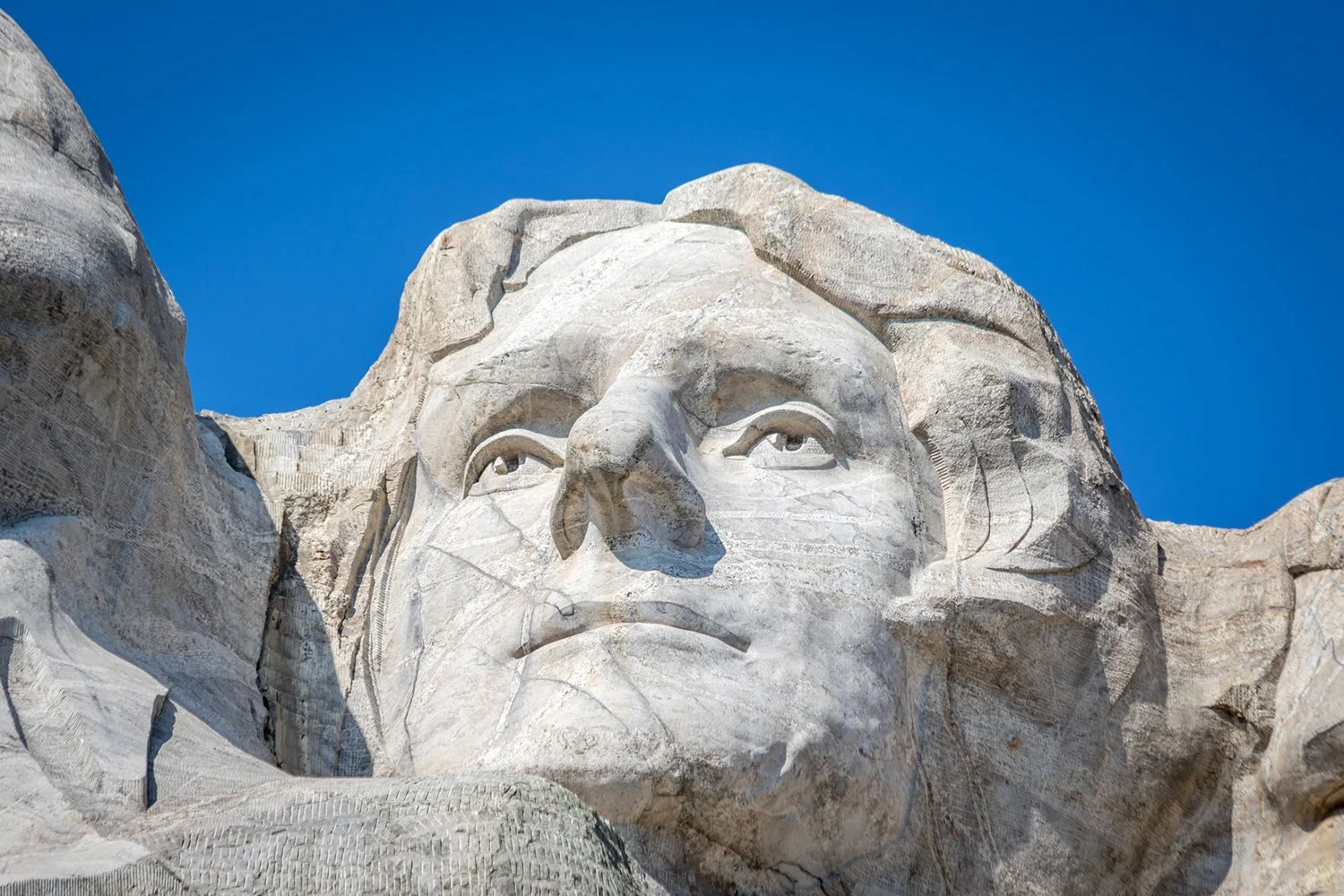
Thomas Jefferson's Guide to Fixing America Today
It is easy to feel discouraged when loud voices seem determined to tear down the United States. Yet history proves that love for this country has always been stronger than the efforts to destroy it. Whenever America feels lost or divided, the life of Thomas Jefferson offers a clear path forward. Although he faced bitter enemies who wanted to ruin the young nation, his steady vision and deep sense of personal duty kept the country on the right track.
To see how Jefferson did this, we have to look back at the 1790s, when the United States was fragile and fiercely divided. During those years, leaders who called themselves federalists held an overwhelming grip on every branch of the government. By 1799, they held the presidency under John Adams and controlled 60 out of the 106 seats in the House of Representatives. They also commanded a massive 22 to ten majority in the Senate, the very chamber where Thomas Jefferson had to preside each day as vice president. On top of that, every single Supreme Court justice had been appointed by a federalist president.
With that total control of power, many of these leaders pushed for a strong central authority that looked much like the British monarchy Americans had just fought to escape. They used their majority to pass the Alien and Sedition Acts in 1798. Those laws made it a crime to criticize the government and threatened the basic freedoms of speech and the press. Meanwhile, foreign powers like Britain and France tried to pull the young republic into their wars and ruin its economy.
Facing this crisis, Thomas Jefferson refused to sit back or complain about the damage others were doing. He certainly did not wait for someone else to rescue the nation. Instead, he lived by the belief that self-government only survives when citizens take personal responsibility and fix what is broken themselves. Even though the federalists controlled the White House, the courts, and Congress while he sat powerless in the vice president's chair, Jefferson got to work.
Rather than giving up, he focused on organizing and uniting his ideals with others who shared his love for liberty. That steady determination broke people out of feeling powerless, inspiring many citizens to step forward and help build a nationwide movement of republicans (note the lowercase r, which is different from the modern-day party). Together, they wrote, organized, and stood firm on the belief that power belonged to the people, not a distant elite.
As a result of that grassroots effort, Americans achieved a peaceful election victory in 1800. Voters flipped the House to 68 republicans, won the Senate, and placed Jefferson in the presidency. Once in office, he quickly reversed those oppressive laws and restored individual freedom. Later, when France threatened American trade on the Mississippi River, Jefferson refused to panic or plunge the nation into a costly war. He turned to smart diplomacy instead and completed the Louisiana Purchase in 1803. That deal doubled the size of the country for $15 million and secured a bright future for generations of Americans.
Jefferson was able to achieve all of this because he placed his duty to his country far above his own comfort. He believed a good citizen must answer the call to serve, even when it demands great personal sacrifice. For Jefferson, serving the public for four decades cost him his private peace and his entire family fortune. Yet unlike politicians who use public office to get rich, he never took a cent through corruption.
In fact, his devotion to public service directly hurt his own wallet. Between hosting endless guests at Monticello and neglecting his own farms while serving the nation, his finances steadily declined. He also honored his personal responsibility by paying off a friend's bad debt, which pushed him even deeper into financial trouble. By the time he died on July 4, 1826, he was more than $100,000 in debt. As a result, his family had to sell off his beloved home and possessions to pay what he owed.
In an age when honesty and accountability in leadership feel rare, Jefferson's selfless example is deeply refreshing. Through his life, he proved that true patriotism is not about complaining from the sidelines, winning easy praise, or gaining wealth. Rather, it is about stepping up to fix problems yourself and uniting with others around shared principles. Above all, it means staying steady when others try to subvert the nation's founding ideals.
Even in his retirement, Jefferson continued to practice what he preached. When he saw a lack of higher education in Virginia, he did not complain or wait for others to act. Instead, he designed, organized, and built the University of Virginia himself, showing his neighbors what one determined citizen can accomplish.
That same lesson applies directly to Americans today. We do not need to feel defeated by those who hate the country, nor should we fall into a helpless mindset waiting for someone else to save us. Whenever you see something wrong in your community or your nation, step forward and fix it yourself.
Best of all, action is contagious. Just as everyday citizens rallied beside Jefferson when the odds seemed stacked against them, people today will join in when they see you taking responsibility. By following Jefferson's example of personal duty, courage, and direct action, we can inspire one another and guide America toward its greatest days yet.