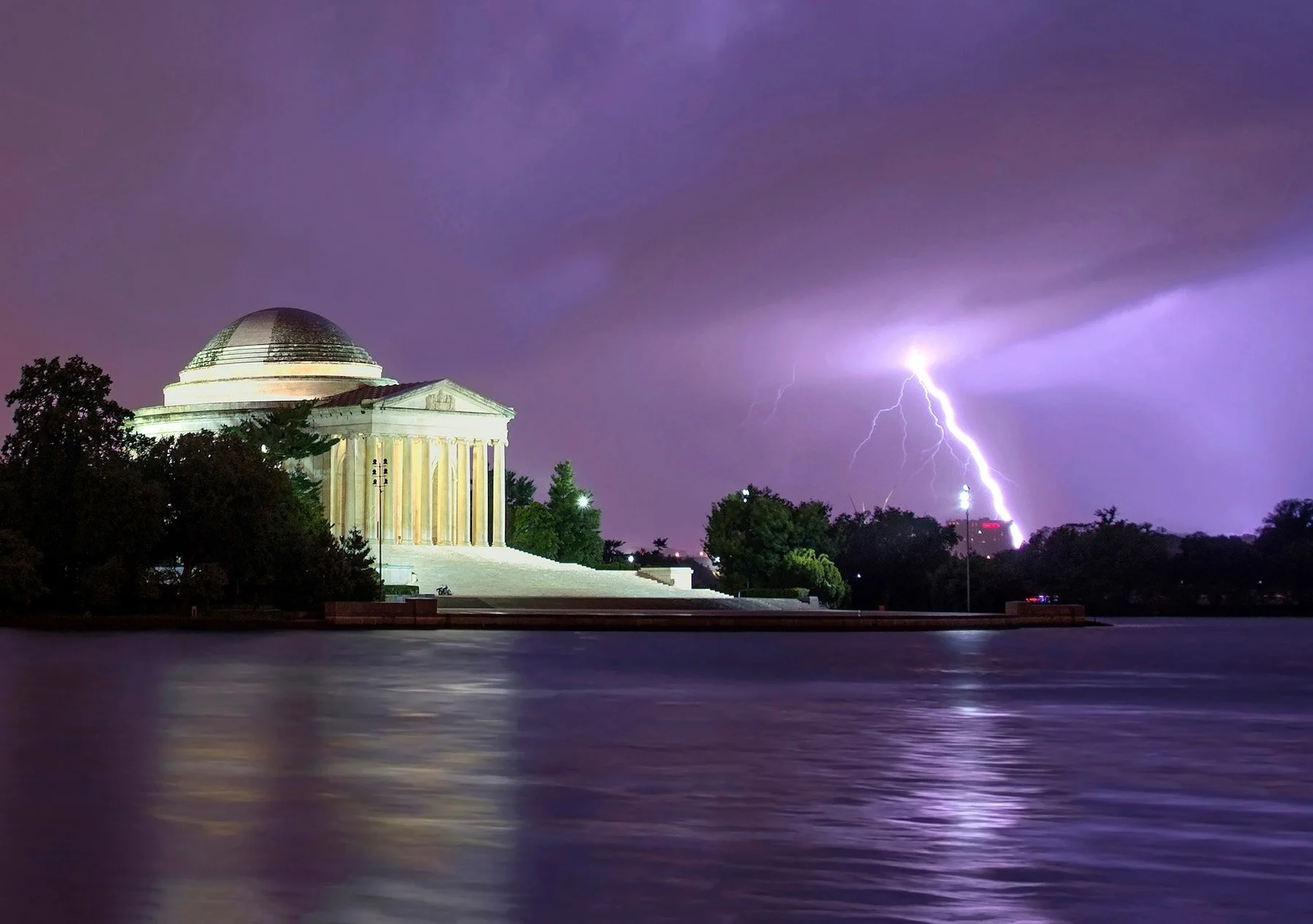
Thomas Jefferson's headaches
Just about everyone has had a headache at some point in their life. Usually, it is just a dull ache from staring at a screen too long, skipping lunch, or catching a mild cold. For Thomas Jefferson, though, headaches were a whole different monster. He was a towering genius who drafted the Declaration of Independence, served as the third president of the United States, and founded the University of Virginia. Yet his massive brain often turned against him. Throughout his adult life, Jefferson suffered from brutal, recurring attacks he called his "periodical head-achs," which historians and modern doctors suspect were migraines, tension headaches, or cluster headaches. Every time life hit him with an emotional gut punch or crushing political pressure, his head erupted in pain that shut him down for days or even weeks.
Jefferson’s first documented attack hit when he was just 20 years old, all because of a girl named Rebecca Burwell. Young Tom had a massive crush on Rebecca, whom he nicknamed "Belinda" in his letters. In October 1763, Jefferson tried to propose to her at a dance in Williamsburg, Virginia. He got so nervous that he stammered, fumbled his words, and completely blew it. By March 1764, word got out that Rebecca was marrying her neighbor, another man named Jacquelin Ambler. On March 20, 1764, a heartbroken Jefferson wrote to his friend William Fleming late at night. He explained that the shock and embarrassment had knocked him flat with a violent headache lasting two full days. It was a rough start to a problem that would bother him for 44 years.
After getting his heart broken, Jefferson had no major documented attacks for about 12 years until a family tragedy hit in 1776. On March 31, 1776, his mother, Jane Randolph Jefferson, died suddenly of a stroke. The grief set off one of the longest and worst attacks of his life. For five to six weeks straight, Jefferson could barely function and could not read, write, or focus. Remarkably, he barely got better in May 1776 before heading to Philadelphia to write the Declaration of Independence that June.
The same pattern of grief and stress causing bad head pain happened again and again in the 1780s. When his wife, Martha Wayles Skelton Jefferson, died in September 1782 after ten years of marriage, Jefferson fell apart. According to his daughter’s later recollections, his grief was so overwhelming that he paced his room for weeks until he collapsed from exhaustion, and once he finally came out, he took long horseback rides alone around his Virginia farm to try to clear his head. By March 1, 1784, he wrote to his close friend William Short that another attack forced him to avoid reading, writing, and "almost thinking." Later that year, in August 1784, he moved to Paris to serve as the U.S. minister to France. Between early homesickness, heavy diplomatic work, and later in 1786 a complicated romance with a married artist named Maria Cosway, his time in France brought several more crippling headaches lasting four to six weeks at a time.
Even when he reached the top of American government, his head would not give him a break. In the spring of 1790, right after starting as George Washington’s first Secretary of State, Jefferson got stuck in bitter political fights with Alexander Hamilton over the country's money. On May 27, 1790, Jefferson admitted in a letter that a periodical headache stopped him from doing any work for almost a month. The stress dragged into 1791, leaving him with an "almost constant" headache through the entire winter and spring. He only got relief in May and June of 1791 when he finally stepped away from his desk for a relaxing month-long trip through New York and New England with his close friend James Madison.
His last big flare-up hit while he was living in the White House as president. In March 1807, Jefferson was caught in intense political drama, including the treason trial of his former vice president Aaron Burr and rising trouble with Great Britain. A lingering cold soon turned into a stubborn headache. On March 20, 1807, Jefferson wrote to his daughter Martha that he was on day seven of an attack. The pain was not as sharp as when he was young, but it shut him down every single day from 9:00 or 10:00 in the morning until dark. Light made the pain unbearable, forcing him into a pitch-black room all day with only a tiny window to read or write at dawn. He tried common 1700s medicines like calomel, which had mercury in it, and Peruvian bark, which contains quinine, noting neither helped at all.
Luckily, leaving the White House in 1809 brought that 44-year stretch of misery to a close. Once he retired from the presidency and returned to a quieter life at Monticello, the attacks stopped coming back. By 1819, at age 76, he happily wrote to a friend that his "periodical head-achs" had left him for good. Modern doctors see this a lot, since chronic headaches like migraines often peak during a person's busiest, most stressful years and fade away in their late 60s or 70s. Stepping away from politics and getting older finally gave his brain a permanent break.
Retiring to Monticello gave Jefferson peace for the rest of his life, yet it turned out not to be a permanent break after all. Today, modern politics and social justice campaigns refuse to leave him alone. Even the current management of Monticello spends every day falsely tearing down his name, honor, and legacy. After everything he suffered through and everything he gave this country, let the man finally rest in peace.