Why Monticello is wrong about Jefferson’s paternity
When we look at history, we expect historians and museums to apply the same strict rules of evidence to every claim. Yet a close look at how the Thomas Jefferson Foundation, the private nonprofit that owns and operates Monticello, handled two major historical mysteries reveals a striking double standard.
In one case, involving a bottle of 18th-century wine, Monticello demanded absolute documentary proof before accepting a connection to Thomas Jefferson. In another case, involving whether Jefferson fathered six children with an enslaved woman named Sally Hemings, the same institution quickly embraced a sweeping conclusion even though the DNA study didn't involve all six children, but only one. Examining both mysteries side by side shows how modern cultural agendas can shape how historical institutions weigh evidence.
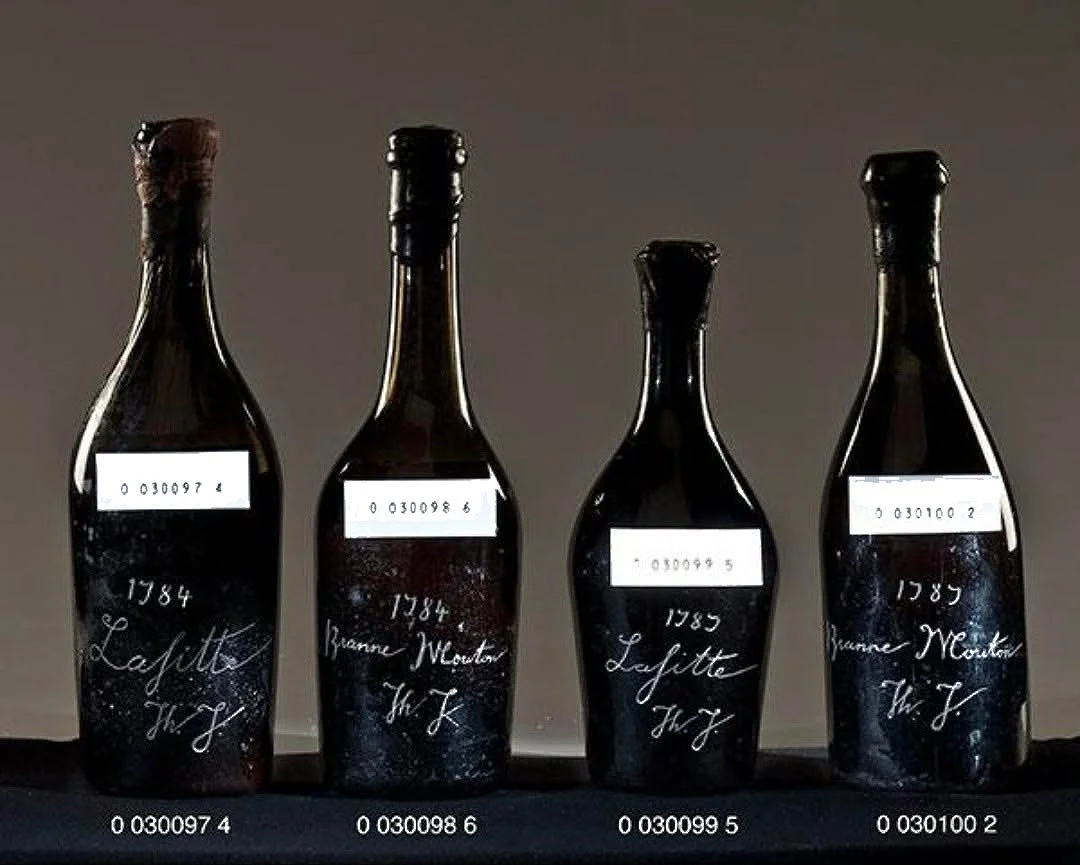
In December 1985, German collector Hardy Rodenstock auctioned a bottle of 1787 Château Lafite at Christie's in London engraved with the initials "Th. J." Publisher Christopher Forbes bought it for £105,000, or $156,450, setting a world record. Later, American billionaire Bill Koch bought four similar bottles for roughly $500,000.
When Koch’s staff asked Monticello in 2005 to verify the bottles, curator Susan Stein flatly rejected them. Monticello experts had raised doubts as early as 1985, noting that Jefferson kept meticulous records of every wine order he placed between 1787 and 1792, none of which mentioned engraved "Th. J." bottles. Furthermore, no matching glass fragments had ever been excavated at Monticello. Without a written paper trail, Monticello refused to validate the bottles, and forensic tests later confirmed the engravings were likely made with modern electric tools.
In contrast, consider how Monticello handled the debate over Sally Hemings. In November 1998, the journal Nature published a Y-chromosome DNA study led by Dr. Eugene Foster that tested descendants of Hemings’s youngest son, Eston, alongside descendants of the Jefferson male line. While the results matched the Jefferson family, the test could not distinguish between Thomas Jefferson and other male relatives who visited Monticello, such as his younger brother Randolph. More importantly, the study only tested descendants of one child, Eston, leaving out the other five children recorded in Jefferson’s Farm Book: Harriet (born 1795), Beverly (born 1798), an unnamed daughter (born 1799), a second Harriet (born 1801), and Madison (born 1805).
Despite these clear gaps, Monticello moved rapidly. Just two months after the study appeared, the Foundation formed an internal research committee, and by January 2000, it declared a "high probability" that Jefferson fathered Eston. The committee went even further, stating that he "most likely was the father of all six of Sally Hemings’s children," even though the DNA study had only tested one child, not six. That announcement immediately made front-page news worldwide. It was an irresponsible leap that lent institutional authority to centuries-old political gossip and tarnished Jefferson’s legacy.
To reach that conclusion, the committee abandoned the strict standard of airtight, written proof required for the wine bottles. Instead, it relied on circumstantial clues like statistical odds regarding when Jefferson was home at Monticello, the fact that he eventually freed the surviving Hemings children, and family oral histories rooted in secondhand accounts published in partisan newspapers roughly 50 years after his death.
In stark contrast to those late, secondhand claims, Monticello dismissed direct, firsthand primary sources pointing away from Jefferson. Those contemporary accounts included Jefferson’s own private written denials, as well as the recorded testimonies and letters of his daughter Martha, his grandchildren Thomas Jefferson Randolph and Ellen Wayles Randolph Coolidge, Monticello overseer Edmund Bacon, and formerly enslaved resident Isaac Granger Jefferson, all of whom lived at Monticello, witnessed daily life there firsthand, and maintained that no such relationship existed.
Decades later, the scientific evidence remained incomplete. When a September 2026 preprint study used hair samples to test Jefferson's DNA, it still only tested two of the children, Madison and Eston, rather than all six. Released alongside a commercial book launch before undergoing peer review, the study drew sharp criticism for major methodological flaws, missing lineages, a reliance on computer modeling rather than testing living male-line rivals, and a misleading 99.96% certainty metric hinged on an unproven assumption that Eston and Madison shared the same father.
In fact, retired professor Dr. Mary Lee Brady-Atkins, a Sally Hemings descendant and study participant, was so shocked the findings were tied to a book launch before peer review that she demanded her DNA be removed from the study. To her, the authors cared more about selling a marketable story than following strict science. She also came to believe that Jefferson did not father Hemings’s children.
Despite these doubts, to this day Monticello maintains that Jefferson fathered all six of Hemings’s children. Influenced by former board member Annette Gordon-Reed’s argument that suggesting Sally Hemings had different partners relies on racist stereotypes, the institution appears eager to protect Hemings’s dignity. Yet, in doing so, Monticello shows little regard for Jefferson’s own reputation and honor, dismissing his multiple denials along with five firsthand sources that support his innocence.
Taken together, the sharp contrast in how Monticello operates illustrates the influence of modern progressive ideology on historical institutions. With a politically neutral artifact like a wine bottle, Monticello acted as a strict gatekeeper that refused to take a leap of faith without direct, written, and physical proof. Yet on race and slavery, a topic central to modern progressive narratives, the institution lowered its bar, relying instead on circumstantial clues, statistical odds, partial DNA data, and secondhand accounts.
By jumping from a single Y-chromosome match in 1998 to claiming he fathered all six children in 2000, and still maintaining that claim in 2026, Monticello prioritized a culturally fashionable message over scientific and academic caution. Given how severely such claims damage Jefferson's reputation, one would expect the very foundation tasked with interpreting his life to exercise extreme care before making sweeping declarations. Instead, it rushed to judgment, and with Monticello's credibility compromised by such clear subjectivity, it becomes extremely difficult to trust that it is approaching history objectively.
Ultimately, history should not be a tool used to serve contemporary political agendas. Whether scholars are examining a dusty bottle of French wine or the complex family tree of a Founding Father, the rules of evidence must remain the same. When historical foundations bend their standards to fit a popular modern narrative, they trade objective truth for ideological approval, eroding public trust in the history they are meant to protect. Just as those fake bottles of wine were misattributed to Jefferson, Monticello’s claims falsely attribute paternity to him as well.
ADDENDUM:
There is virtually countless evidence demonstrating Thomas Jefferson’s innocence. I am working through them all to present to you so please be patient. No matter how Monticello promotes its false claims, the mountain of overwhelming historical facts cannot all be hidden. As one member noted, even Monticello's own displays contradict their false statements. Facts are everywhere which can lead to the truth if you put on your critical thinking cap.
Thus I encourage everyone to do more research into Jefferson's life, beyond listening to academics with progressive agendas. The more you dig, the more you would love Jefferson like I do! Mr John Pankow’s comment (below) serves as yet another piece of supporting evidence. This is precisely why Jefferson refused to address the rumors and accusations publicly; he considered them absurd and beneath his dignity. Yet today, Monticello continues to perpetuate the same slander built on assumptions and gossip.
Read Mr Pankow’s comment:
One thing that's left out of this excellent account is Thomas Woodson. Callender's original revenge motivated slander against Jefferson was published in 1802....six years before Eston Hemings was born. It began with the following statement:
"IT is well known that the man, whom it delighteth the people to honor, keeps, and for many years past has kept, as his concubine, one of his own slaves. Her name is Sally. The name of her eldest son is Tom. His features are said to bear a striking although sable resemblance to those of the president himself. The boy is ten or twelve years of age. His mother went to France in the same vessel with Mr. Jefferson and his two daughters."
The first glaring error is apparent. Sally Hemings did not go to France with Jefferson, but was sent as a replacement nursemaid to one of his daughters to bring her to him in France. And what of Tom? The Monticello fanatics list six children born to Sally Hemings at Monticello: Harriet (1795-1797), Beverley (1798-aft. 1820), Thenia (1799-1799, who wasn't even her child), Harriet 2 (1801-aft. 1820), Madison (1805-1877), and Eston (1808-1856). Where's Tom?
Per the oral history of his descendants, upon which so much credibility is given lately, he was Thomas H. Jefferson, aka. Thomas "Tom" Woodson (1790-1879) who spent his later years in Ohio. He would have been the child she conceived in Paris, when TJ was the only male Jefferson with access to her. Several of his descendants' DNA was tested in 1998, along with a descendant of Eston, and he was found NOT to be related to ANY Jefferson.