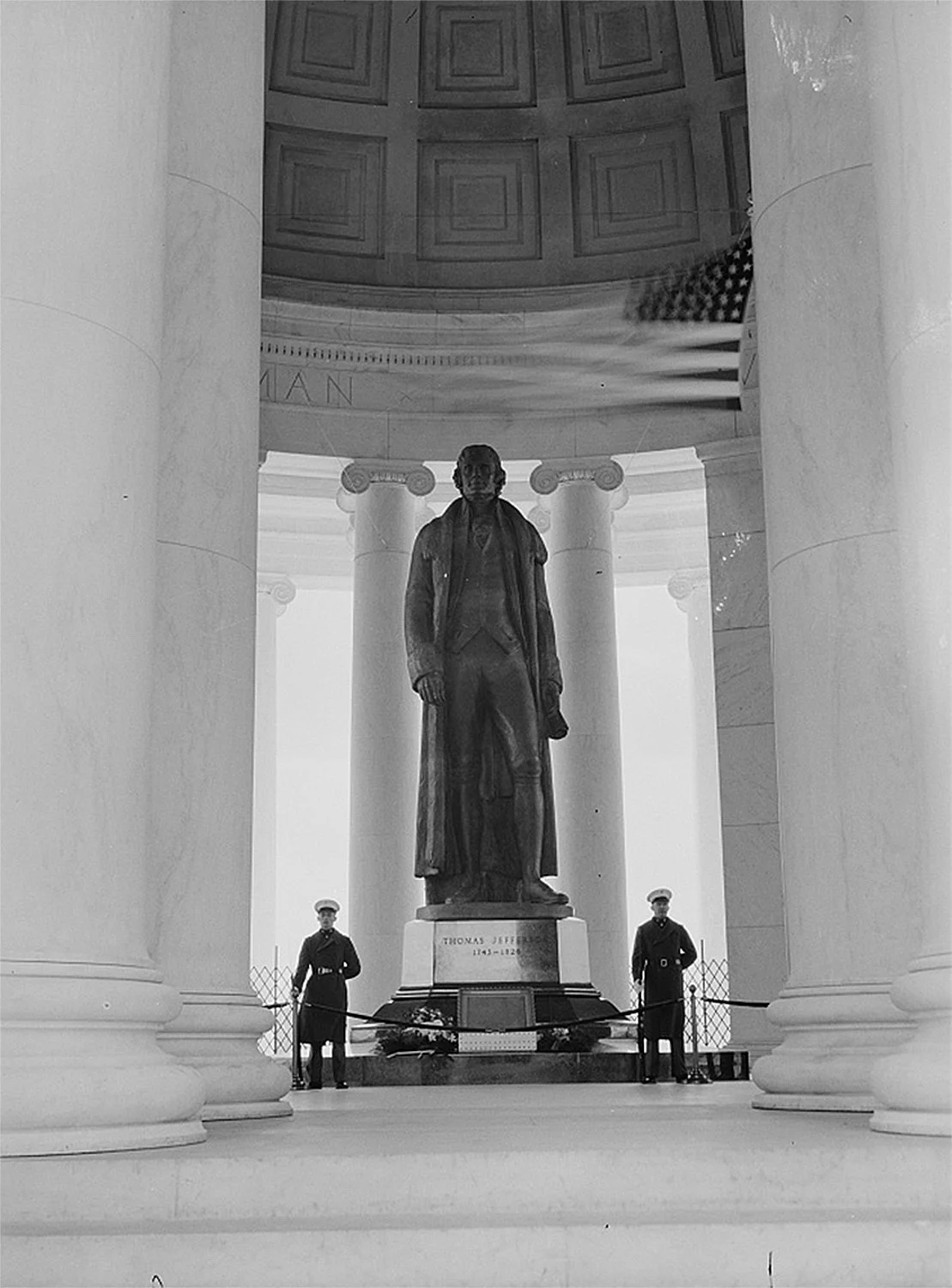
Why ThomasJefferson.com
Why preserving Thomas Jefferson’s legacy is our sacred duty
On February 17, 1826, near the very end of his life, a frail Thomas Jefferson penned a letter to his lifelong friend and political ally, James Madison. In it, he expressed a profound, final plea that laid bare his deepest anxieties and hopes for the future:
"It has also been a great solace to me to believe that you are engaged in vindicating to posterity the course we have pursued for preserving to them, in all their purity, the blessings of self-government, which we had assisted too in acquiring for them. If ever the earth has beheld a system of administration conducted with a single and steadfast eye, to the general interest and happiness of those committed to it, one which, protected by truth, can never know reproach, it is that to which our lives have been devoted. To myself you have been a pillar of support thro’ life. Take care of me when dead, and be assured that I shall leave with you my last affections."
Mr. Jefferson was not merely asking a friend to maintain a political system or watch over the nation. He was making a deeply personal plea for his own memory. When he wrote the words, "Take care of me when dead," he was asking Madison to protect his character, his name, and his historical honor from being distorted or forgotten. He was entrusting posterity with the truth of his life, his intentions, and his personal soul.
Today, with James Madison long gone, that profound responsibility to look after the man himself falls to us. As the editors of ThomasJefferson.com, we believe that preserving Jefferson’s personal legacy is not just an abstract historical exercise. It is a binding moral obligation, a civic responsibility, and a supreme honor to care for him. We must continue to take care of Jefferson as an individual, ensuring that his life, protected by truth, can never know reproach.
To understand why we must fiercely guard Jefferson the man, we must look at what he personally sacrificed. Jefferson did not just give America ideas. He poured his own mind, his health, his fortune, and his private peace into the foundation of American liberty. As a human being, he endured fierce political vitriol, crushing financial ruin, and immense personal loss. Yet his single and steadfast eye never wavered from the happiness of the people. It is easy to celebrate an abstract nation, but we must remember the vulnerable human heart behind the historical giant.
A man who sacrificed his entire life to build the stage upon which American democracy walks deserves to have his personal reputation protected. We owe it to Thomas Jefferson to preserve his true story, acknowledging both his brilliant triumphs and his complex humanity.
Furthermore, protecting Jefferson's personal legacy is essential because history is driven by human stories, not just political philosophy. Jefferson understood that institutions are fragile, but reputations are even more fragile. In his letter, he took comfort in knowing he and his life's work will always be "protected by truth."
When we allow a historical figure to be oversimplified or reduced to a caricature, we fail the man himself. By maintaining an accurate, comprehensive, and honest record of Jefferson’s life, we keep his true spirit alive. Taking care of Jefferson means defending his character against unfair reproach, ensuring that his personal dedication is never obscured by the passage of time.
Critics might argue that the past should be left to the history books, or that we should focus only on the country rather than the individual. However, a nation cannot fully understand its freedom without understanding and respecting the people who fought to secure it. Madison can no longer answer Jefferson’s final earthly request to look after him, but we can. By stepping into that void, we ensure that the man who gave so much is never abandoned by the posterity he helped create.
Ultimately, we do this work because personal gratitude and historical integrity demand it. Thomas Jefferson's final comfort on his deathbed lay in the belief that his closest friend would defend his name. We inherit the fruits of his labors every single day. Therefore, we must inherit the responsibility of his final wish. The editors at ThomasJefferson.com take up this mantle with pride. We will continue to educate, to remember, and to protect the unvarnished truth of Jefferson the man, fulfilling a 200-year-old promise to take care of him and let his memory stand beyond reproach.