
The unbelievable story of Ohio, from Jefferson firing its governor to Eisenhower signing its backdated ratification
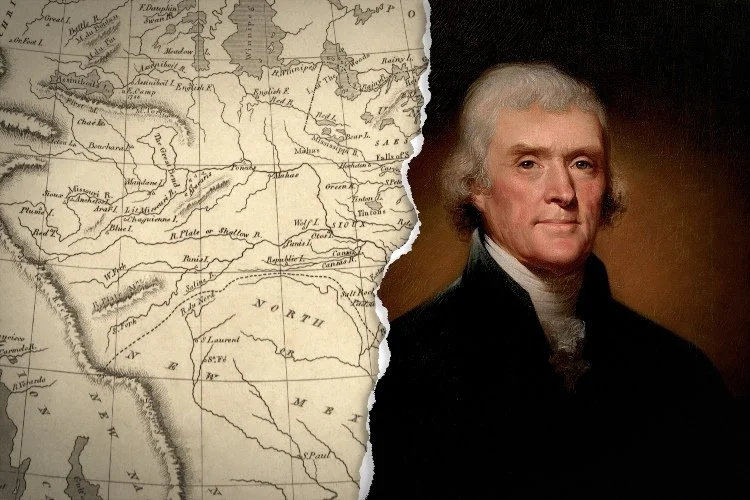
To understand how an entire state can be lost in the couch cushions of American history, we must first look at the birth of Ohio. It was not a peaceful affair, but rather a vicious, bitter political street fight between two opposing political factions.
In those days, specifically the year 1802, the territory was ruled by a Governor named Arthur St. Clair. He belonged to the federalist party, my fierce political opponents. St. Clair was an arrogant, stubborn old general who treated the territory like his personal kingdom. He desperately wanted to prevent Ohio from becoming a state because he knew the people living there hated his party and would vote for my party, the republicans. He even tried to chop the territory up into smaller pieces to ensure it could never meet the population requirement for statehood.
The people of Ohio were furious. They sent an agent to me in Washington, begging for help. I was delighted to oblige. I signed the Enabling Act on April 30, 1802, which gave them permission to bypass St. Clair, hold a convention, and draft a state constitution. When St. Clair found out, he threw a public temper tantrum, denouncing the United States Congress. Using my presidential authority, I fired him on November 22, 1802. With St. Clair out of the way, the citizens of Ohio rushed to write their constitution in a breathless 25 days. They were so eager to become a state that they did not even bother to put the constitution up for a vote by the public, they just packed it into a saddlebag and sent a rider on horseback straight to Washington.
The rider arrived in Washington in early 1803. Congress looked at the new Ohio Constitution, nodded in approval, and on February 19, 1803, passed an act extending federal laws and courts over the territory. I signed that act. And right there, at the exact moment of triumph, the United States Congress completely went to sleep.
Ohio was the very first state to be carved out of the old Northwest Territory. Because it was the first, Congress did not yet have a standardized, rigid routine for admitting states. In their minds, passing the court law was enough. They assumed the work was done and moved on to other things. They completely forgot that under our system, Congress must pass a separate, formal Joint Resolution of Admission to officially ratify the new state constitution and welcome it into the Union. Because they skipped that vote, no such document was ever generated. Because no document was generated, it was never sent to my desk. Everyone just assumed the paperwork was in order. On March 1, 1803, Ohio's new general assembly met for the first time, and the state opened for business.
For the next 150 years, the United States pulled off a magnificent trick, we pretended a territory was a state, and nobody noticed. Ohioans paid federal taxes, sent soldiers to our wars, and miraculously, eight U.S. Presidents, including Ulysses S. Grant, Rutherford B. Hayes, and William Howard Taft, were elected despite hailing from a patch of land that technically remained federal territory.
Then came 1953. Ohio was preparing a massive celebration for its 150th birthday. A group of meticulous Ohio schoolteachers traveled to Washington, D.C. They went to the Library of Congress and the National Archives because they wanted to get a copy of the original 1803 statehood decree to display back home for the big party. They asked the clerks to fetch the Ohio Admission Document. The clerks searched the shelves, the drawers, and the vaults. They found the documents for Louisiana, Indiana, and Illinois, but for Ohio, there was nothing. The final vote had never happened.
The news leaked, and it became an absolute media circus. Radio hosts cracked jokes, and newspapers ran wild headlines. People began to point out the staggering legal paradoxes. If Ohio was not a state, were its citizens actually American citizens? Were the votes cast by Ohio congressmen over the last 150 years completely invalid? Did Ohio owe the federal government a century and a half of back taxes, or did the federal government owe them a massive refund?
Ohio Representative George H. Bender rushed to the floor of Congress in January 1953 and introduced a special bill to finally grant Ohio official statehood. But the moment he did, the legal minds in Washington realized they were trapped in a hilarious, infinite loop of logic. If Ohio was not a state, then George Bender was not a real U.S. Congressman. If Bender was not a real Congressman, he had absolutely no legal authority to introduce a bill in the United States Congress. Therefore, Congress could not vote on the bill to make Ohio a state, because the bill was introduced by a man who did not legally exist in their chamber.
Congress decided to simply ignore this headache. They passed the resolution anyway. To burst the logical bubble, they inserted a crucial legal phrase: "Retroactive." President Dwight D. Eisenhower signed the bill on August 7, 1953. The law stated that Ohio was officially a state, and its statehood was backdated to March 1, 1803. By applying this legal time travel, Bender's status as a congressman was retroactively validated, the presidents were saved from illegitimacy, and the matrix of American bureaucracy was repaired.
You might think the story ends there, but human greed ensures that history never truly sleeps. Decades after Eisenhower signed the fix, a group of clever tax evaders looked at the 1953 loophole and saw a golden opportunity. They went to federal court with a wild argument. They noted that the Sixteenth Amendment to the U.S. Constitution, which allows the federal government to collect Income Tax, was ratified by the states in February 1913. Ohio voted to ratify that Amendment. But they argued that in 1913, Ohio was not legally a state, meaning Ohio’s vote for the income tax was invalid, the 16th Amendment failed, and the federal income tax was an illegal scam.
It was a creative try, but the federal judges were not amused. The courts flatly rejected the argument, ruling that because Eisenhower's 1953 law was retroactive, Ohio was legally a state in 1913, its vote counted, and everyone still had to pay their taxes.
So there you have it: the full, unvarnished history. It was not an act of malice, and it was not a failure of my quill. It was simply the grandest, longest running clerical error in the history of the Western world. Congress forgot to vote, Ohio forgot to check, and for 150 years, everyone just got along on good faith and neighborly assumptions. I gave Ohio its spark, it just took Congress a century and a half to turn on the lights.