Why America loves Lafayette
Based on Jefferson's letter on March 15, 1793
On March 15, 1793, while I served as Secretary of State under General Washington, I sent a critical directive to Gouverneur Morris in France. Our beloved friend, the Marquis de Lafayette, had been captured by Austrian authorities after fleeing the radical turn of the French Revolution. I authorized Morris to use every ounce of American diplomatic influence to secure his freedom. I even gave him the power to promise future American favors to any foreign nation that would release him. This was not merely a matter of state policy. It was a matter of the heart, because America owed a debt of gratitude to this noble man that we could never truly repay.
I first met the Marquis in 1781 when I was Governor of Virginia. He arrived to defend our state from the British, and his brave actions quickly earned my deep respect. Years later, when I served as America's minister in Paris, our friendship grew even stronger. He was my guide through French society and a true partner in the cause of liberty. We spent hours working together on the early drafts of the Declaration of the Rights of Man. He was a man filled with the pure spirit of freedom, and we shared a vision for a world liberated from tyranny.
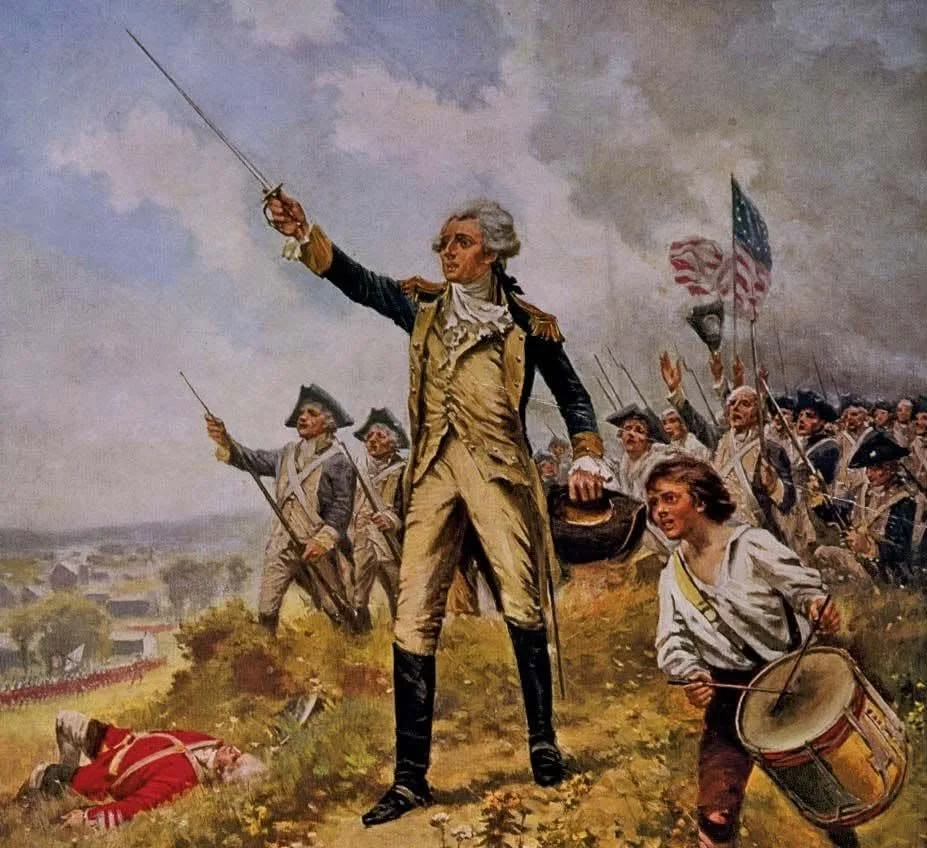
To understand why Lafayette is so deeply loved by myself and the entire American nation, one must look at his incredible sacrifice. He was a young and wealthy French nobleman who had everything to lose. Yet, he chose to leave his life of luxury and sail to our shores on a ship he bought with his own money. He volunteered to fight in our army without asking for a single dime of pay. He shed his own blood for a country that was not his own, driven entirely by an unyielding belief in human liberty.
Beyond his military bravery, Lafayette was the essential bridge between the United States and France. His high standing in the French court helped us secure the vital military, naval, and financial aid that ultimately won our independence. He became like a son to General Washington and a brother to the rest of us. He never wavered in his principles. Even when he returned to France, he continued to fight for constitutional rights and constantly urged his American friends to face the great evils of slavery.
Decades later, in 1824, the Marquis returned to America and visited me in Virginia. Though we were both old and frail, our emotional embrace on my front lawn proved that time and distance could never weaken our bond. He will always hold a sacred place in the story of America. He is the very definition of a true friend and a lifelong champion of freedom.